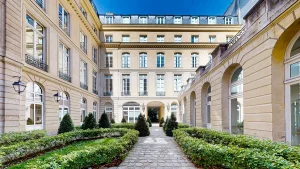
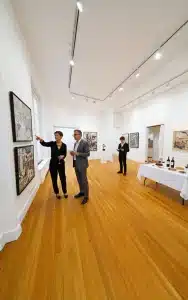
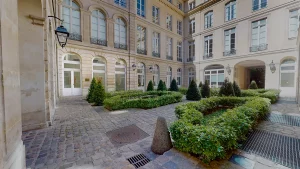
Privatizing a historical monument in Paris offers an exceptional setting for an event, provided the rules are followed. Scenography, technical aspects, capacity, and logistics must be adapted to the venue to preserve its heritage while revealing its unique character. Here’s what this setting truly allows.
Organizing a professional event in a listed or registered building is a dream for every brand: hosting guests beneath 18th-century moldings, presenting a product in a Grand Siècle mansion, dining overlooking the arcades of Paris’s oldest square. But this dream is often accompanied by a concern: what does privatizing a historic monument actually allow? What rules govern the setup, the technical aspects, and the catering? The answer lies in a simple idea: the setting is not a constraint that limits the project, but rather a method that protects and elevates it. Galerie Joseph, founded in 2008 by Michael Timsit, has been privatizing listed or registered buildings in the Marais district for years and has turned this method into a core expertise. Here, point by point, is what a successful privatization in a protected location allows and organizes. To discover the buildings involved, visit our dedicated page and explore all our private mansions in the Marais by clicking here.
Sommaire

Classified, registered, protected area: understanding what the law protects
Before organizing, one must name. A building can be listed as a Historic Monument, the highest level of protection, like the Hôtel Le Lièvre de la Grange at 4 rue de Braque, listed in 1953 for its Louis XV rocaille decor, its curves, and its 18th-century ornamentation. It can be registered, like the Maison Mansart at 5 rue Payenne, a tribute to François Mansart, a leading figure of French classicism and the art of proportion. Finally, it can be included within a protected area: the entire Marais district falls under the PSMV, the Safeguarding and Development Plan established by the Malraux Law of 1962, which made it the first protected sector in France. Some places have multiple protections, such as the south-facing apartment on the Place des Vosges, located in a listed building of the complex commissioned by Henri IV and built between 1605 and 1612. For the organizer, these statuses mean one thing: the decor you come to find is guaranteed authentic and permanently preserved.
The provision agreement: the legal basis of the event
In a protected area, privatization isn’t something that can be arranged simply by placing an order. At Galerie Joseph, it relies on a rental agreement tailored to protected sites. This document defines the spaces available for the event, the hours of occupancy, the setup and dismantling conditions, insurance obligations, and building regulations. Far from being mere paperwork, this agreement is your best ally: it clearly outlines what is possible, eliminates last-minute surprises, and clearly distributes responsibilities between the venue, the organizer, and the service providers. A well-contracted event in a historical monument is one where everyone knows exactly what they can do, where, and when.
Self-supporting scenography: creating without touching
This is the golden rule of protected sites: nothing is fixed, nothing is drilled, nothing is glued. The entire set design is self-supporting. Weighted structures, totems on bases, freestanding furniture, floor-standing lighting, signage on easels: the whole system stands on its own and is removed without a trace. Sensitive decorative elements—woodwork, parquet floors, fireplaces—are systematically protected during installation and operation. The best set designers are well-versed in this discipline and know how to leverage it: working with the existing decor rather than against it, allowing moldings to breathe, illuminating spaces instead of obscuring them. The result is almost always superior to what a complete overhaul would produce: why cover up a rococo decor that your guests won’t see anywhere else?
Capabilities defined by the building and dedicated manager: controlled execution
In a historic building, capacity is not a variable for commercial adjustment: it is determined by the building’s structure, passageways, staircases, exits, and original flooring. The Galerie Joseph portfolio, comprising over 30 exclusive spaces in the Marais district totaling 7,200 m², offers areas ranging from 25 to 1,200 m², accommodating from 50 to over 700 people. Each venue has its own capacity, clearly stated upfront and strictly adhered to. This transparency protects the organizer: an event tailored to the building’s characteristics is a seamless event, where guests move around comfortably and where safety is not compromised. Best practice is to choose the venue based on the actual size of the event, rather than forcing a specific size into a desired location.
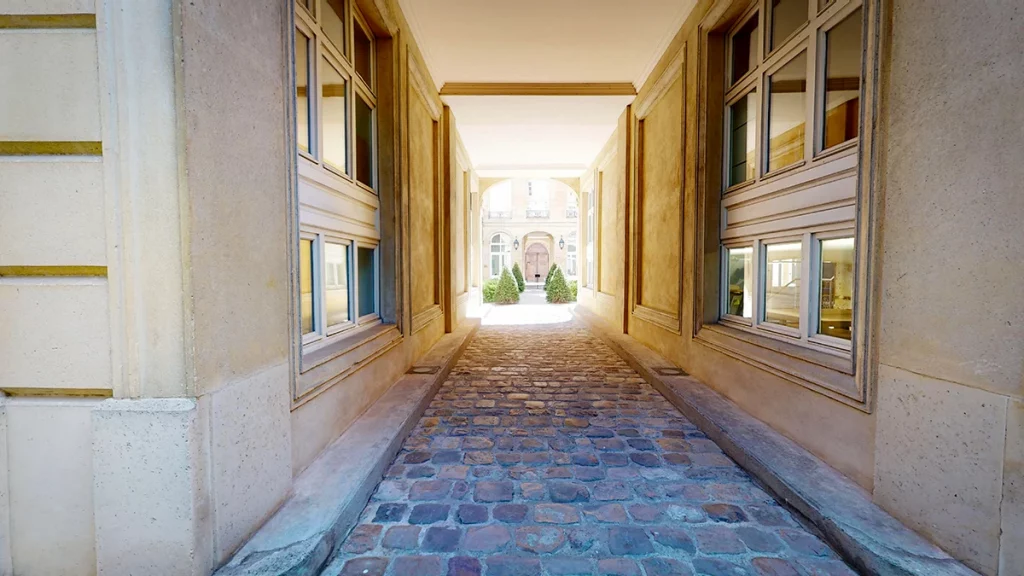
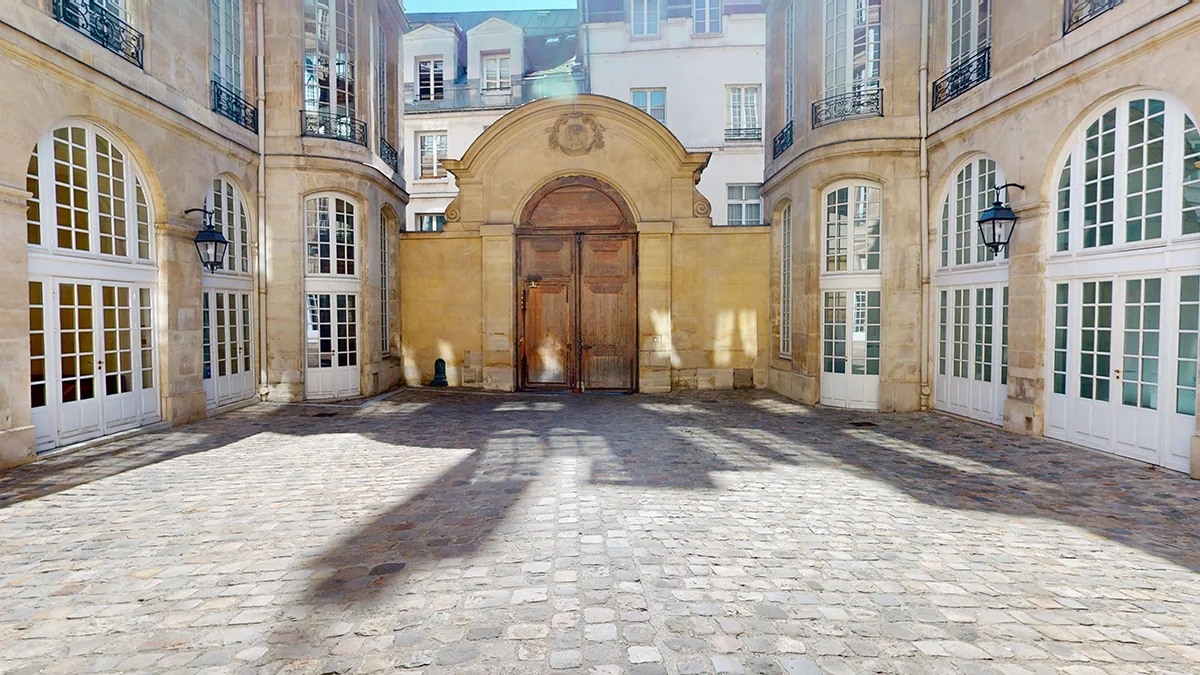
Every private event at Galerie Joseph comes with a dedicated event manager. This person knows every detail of the building, from delivery access and available electrical power to storage areas and critical points in the set design. They coordinate service providers, approve technical setups, ensure compliance with the agreement, and remain present at key moments, from installation to teardown. For an event organizer, this single point of contact makes all the difference: questions are answered immediately, decisions are made quickly, and the agency or company can focus on the event itself rather than on managing the building. The event manager embodies the human element of the framework: they transform it into a resource rather than a set of rules.
Why this framework is an added value, not a constraint
Let’s put the pieces together: a clear agreement, a self-supporting scenography that prioritizes design over technique, realistic capacity limits, and a stage manager to ensure smooth execution. This framework produces exactly what a prestigious event seeks: mastery and distinction. Mastery, because every parameter is anticipated and agreed upon in the contract. Distinction, because respect for the venue guarantees that your guests will enjoy an experience impossible to replicate: the light of a listed salon, the hushed acoustics of a 17th-century suite of rooms, the view of a garden designed four centuries ago. Venues that accept everything all look the same; venues that respect themselves set you apart. This is the fruitful paradox of the historic monument: its rules are the very source of its prestige. Discover all our private mansions in the Marais by clicking here. here.
The uses that work best in a listed or registered place
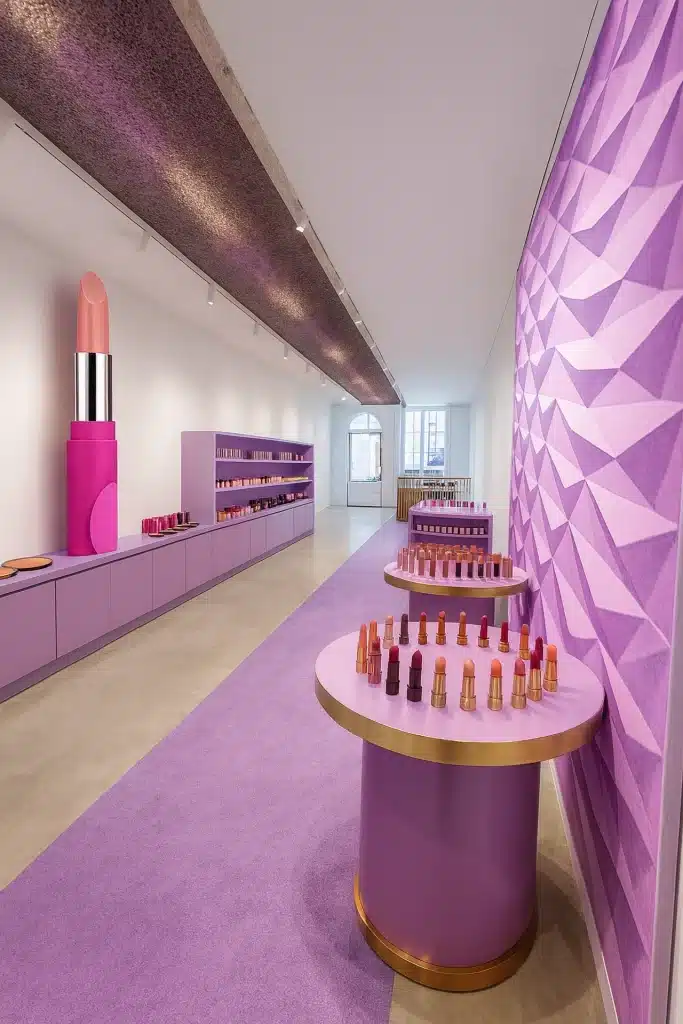
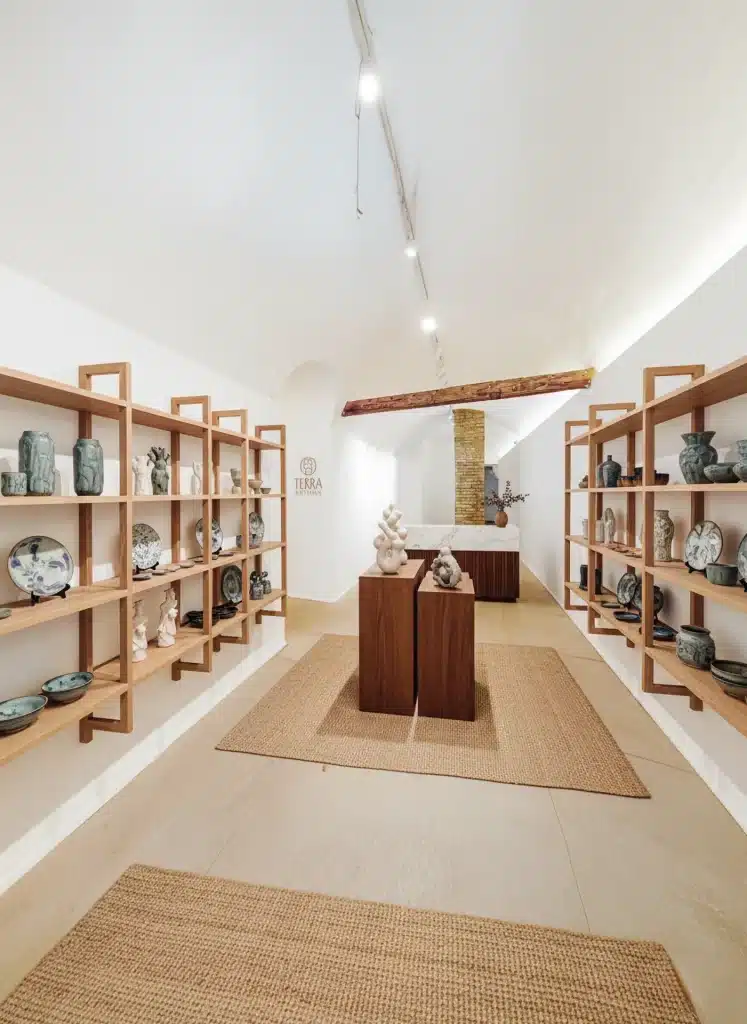
Galerie Joseph’s experience has established a clear typology of the most successful formats. Conferences, roundtables, and management seminars find a unique resonance at the Hôtel de Montmort, 79 rue du Temple: this 17th-century residence hosted the « Saturdays of Montmort, » weekly scholarly gatherings where Roberval and Huygens debated, a circle that preceded the rise of the major scientific academies. Prestigious dinners and public relations events flourish in the 18th-century setting. Collection presentations, product launches, and temporary exhibitions take advantage of the space and light, in dialogue with our dedicated exhibition spaces. Finally, film and corporate photo shoots benefit from authentic, unreconstructed settings. The common point of these formats: they feature content and people, not heavy machinery, and naturally suit self-supporting scenography.
FAQ
Is it possible to install heavy equipment, such as sound and lighting, in a historical monument?
Yes, provided it’s self-supporting: weighted feet, structure placed on top, no attachment to the scenery. The dedicated stage manager confirms the setup and available power beforehand. Most of the needs of a professional event—sound, projection, stage lighting—are perfectly met within this framework.
Who is responsible in case of damage to the set?
The provision agreement defines the responsibilities and insurance requirements of the organizer and its service providers. Systematic protection of the sets, self-supporting stage design, and the presence of the stage manager reduce risk at its source, which explains why incidents remain exceptional.
How long does it take to get a quote for privatization in a protected location?
Galerie Joseph provides a quote within 24 hours for its entire portfolio, including listed and registered properties. A site visit with the dedicated manager then allows for fine-tuning the placement and installation schedule.
Prestige has its rules, and they work in your favor.
Privatizing a historic monument isn’t an obstacle course; it’s a proven method that guarantees both the beauty of the setting and the smooth execution. With tailored agreements, self-supporting scenography, reliable capabilities, and a dedicated event manager, Galerie Joseph has honed this approach since 2008 in over 30 venues in the Marais district. Entrust us with your next professional event in a listed or registered location: get a quote within 24 hours by calling +33 (0)1 42 71 20 22, and discover all our private mansions in the Marais by clicking here. here.
👉 Discover all our spaces on Joseph Gallery.
Are you looking for an unusual place in Paris?
Discover the Galerie Joseph spaces in the Marais and find a venue suitable for your launch, showroom, exhibition, pop-up store or private event.