During Paris Fashion Week, everything happens in the showrooms. It’s there that buyers from department stores, concept stores, and international platforms build their assortments for the coming season. A remarkable collection can lose an order because the showroom wasted twenty minutes of a buyer’s time, or because the lighting misled its colors. Understanding a buyer’s day in session and their specific criteria is key to designing a showroom that works for the collection. Here’s what buying professionals really expect, and how to meet those expectations in a Marais space. For the overall strategy, our complete guide details the entire showroom setup during the sessions.
A typical day for a buyer during a Paris trading session
A buyer traveling to Paris for a trade session lives according to a meticulously planned schedule. Their day often begins with a first appointment at 9:00 a.m. and rarely ends before 7:00 p.m. Between these two times, they have ten to twelve appointments of approximately 45 minutes each, spread across several neighborhoods. Each slot includes travel time, arrival, viewing the collection, taking notes, sometimes placing a pre-order, and then departing for the next location. At this pace, the slightest friction becomes a cost. A showroom that’s difficult to find, a confusing reception, a poorly organized rack—ten lost minutes add up throughout the entire day. The buyer, therefore, isn’t just evaluating a collection; they’re evaluating a complete working experience, from the moment they enter the showroom to the final order.
Sommaire
The forty-five-minute appointment, the unit of measurement for the week
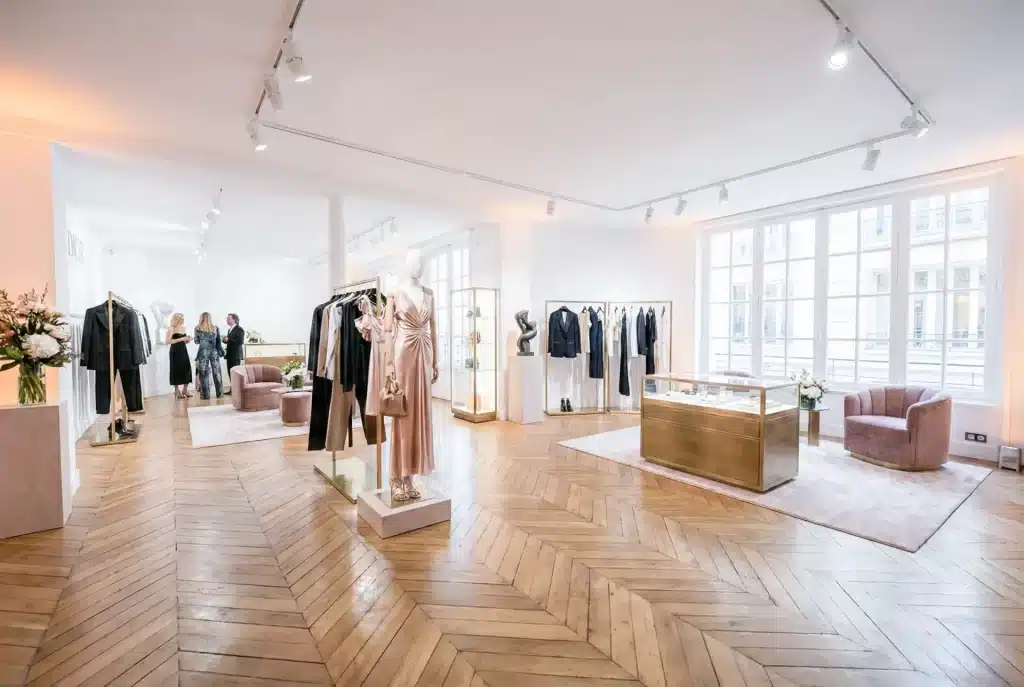
The entire showroom setup should be designed around this time frame. In forty-five minutes, the buyer must understand the brand’s positioning, browse the collection, identify key pieces, ask questions about materials, lead times, and commercial terms, and then formulate a purchase intention. The introductory presentation should be five minutes long, the presentation of key looks fifteen minutes, and the remaining time should be available for discussion and selection. The most professional brands prepare a precise schedule, assign a dedicated person to each buyer, provide a printed lookbook, and offer a price list ready for discussion. This preparation, immediately apparent, signals that the brand will be equally reliable in terms of production and delivery.
A central address, the primary selection criterion
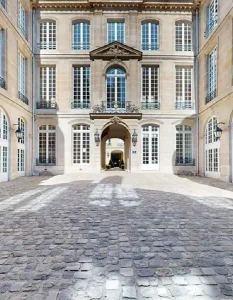
Even before seeing the collection, the buyer has assessed your address. When scheduling appointments, they group them by neighborhood to minimize travel. A brand located in a more remote area risks not fitting into the schedule, regardless of the quality of its work. The Marais has established itself as one of the leading areas for Parisian showrooms precisely for this reason. Buyers move on foot from one appointment to the next, between the streets of Turenne, Charlot, Froissart, Chapon, and du Temple, where Galerie Joseph brings together more than thirty exclusive spaces. This density creates a circuit effect that mechanically increases your chances of securing the requested time slot, as explained on our dedicated page. showroom rental.
Accurate lighting and legible racks: the conditions for a professional eye
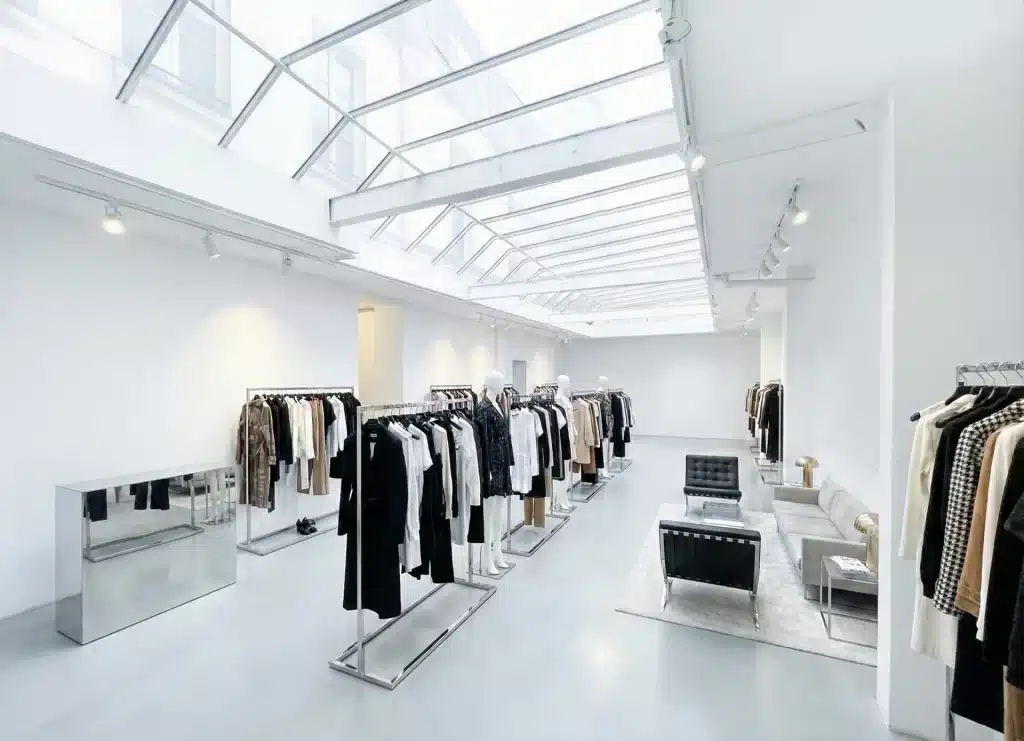
The buyer works with their eyes, and they work quickly. The first element that influences their perception is light. Abundant natural light or well-adjusted professional lighting allows them to judge the exact colors, drape, textures, and finishes. A misleading presentation creates doubt, and doubt is the enemy of a successful sale. The ground-floor spaces with glass walls or large skylights, many of which are located in the Galerie Joseph complex, offer this chromatic fidelity. The second element is the legibility of the racks. A collection should be read like a story, by theme, by silhouette, or by color palette, with sufficient spacing for each garment to breathe. An overcrowded rack forces the buyer to rummage, which diminishes their perception of the brand and wastes valuable time.
The control table, the commercial heart of the event
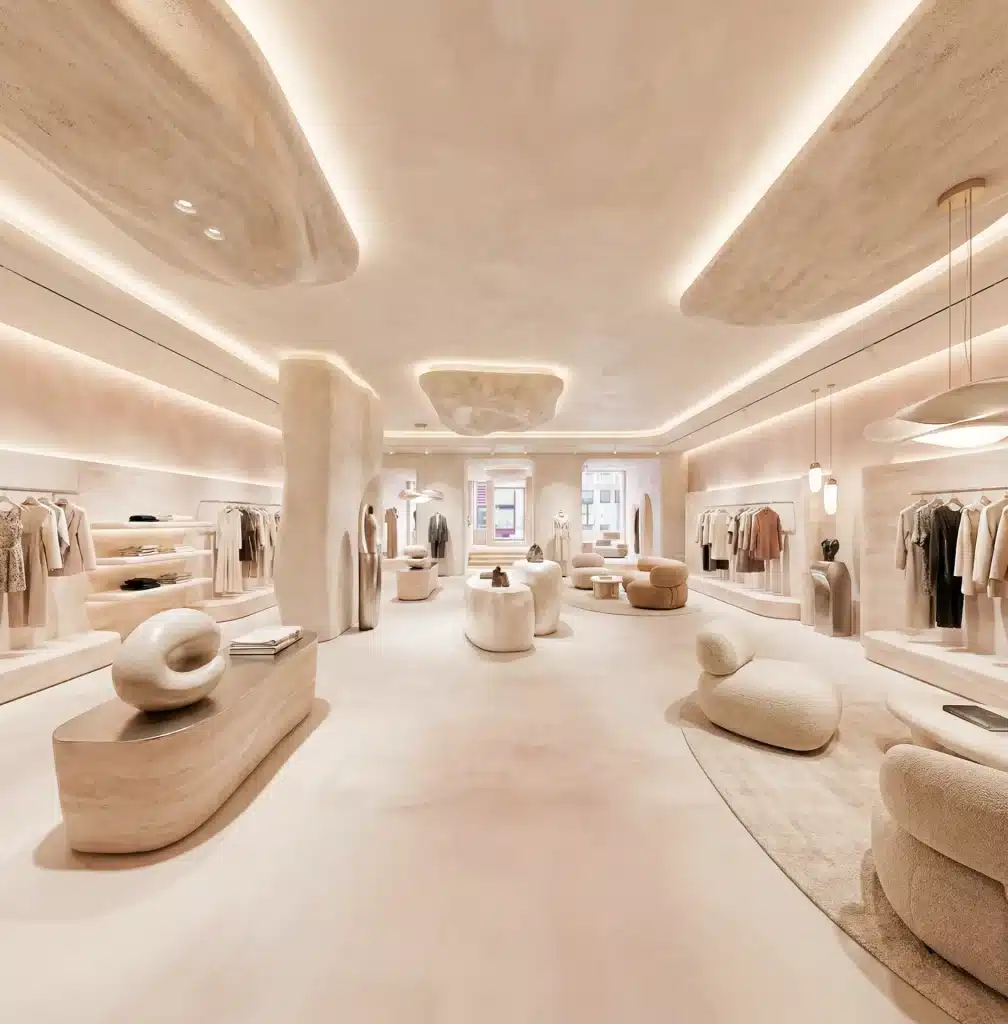
It’s often overlooked in ambitious showroom designs, but the buying meeting concludes seated around a table. This is where the buyer consults the product line sheet, compares wholesale prices, checks minimum order quantities, inquires about lead times, and builds their selection. This table deserves as much attention as the clothing racks. It must be large enough to spread out documents, well-lit, equipped with power outlets, and located in a quiet area, away from foot traffic. Provide water, coffee, reliable Wi-Fi, and printed copies of all sales materials, because a buyer with twelve meetings in a row doesn’t want to be dependent on a file promised for the evening. Some brands set up several tables to accommodate two buyers simultaneously without them having to hear each other, a configuration made possible by the modular spaces ranging from 25 to 1,200 square meters available in the Marais district.
Punctuality and fluidity: the invisible mechanics that provide reassurance
The buyer expects a showroom to run like clockwork. This begins with appointment confirmation, including a precise address, an access code if necessary, and a readily available contact person. It continues with immediate welcome, including a cloakroom for coats and luggage—a crucial detail for professionals traveling between capital cities. Finally, it requires that the appointment starts and ends on time. A fifteen-minute delay can disrupt the buyer’s entire day and will be remembered the following season. This seamless operation relies on invisible logistics: a separate storage area, discreet restocking of racks between visits, and a team briefed on the process. The dedicated manager who oversees each setup at Galerie Joseph is precisely responsible for this mechanism.
This is what makes a buyer recommend a brand or cross it off their list.
Buyers talk amongst themselves, compare their discoveries, and share addresses. A brand enters positive conversations when it combines a coherent collection, a pleasant showroom to work in, and flawless commercial professionalism. It falls out of the conversation, sometimes permanently, for reasons unrelated to style: a showroom that’s impossible to find, inconsistent wholesale prices, a team unable to answer questions about production times, pieces missing from the racks even though they’re listed on the line sheet. The punishment is silent. The buyer doesn’t complain; they simply don’t return the following season. Conversely, an impeccable experience transforms them into an advocate for their peers. The showroom isn’t just a backdrop; it’s a fully-fledged sales tool, as our [author/researcher] explains. pillar page on showrooms.
Designing your showroom around the appointment: the Galerie Joseph method
The best approach is to map out the buyer’s journey before designing the store layout. Starting at the entrance, you map out the path to the reception area, the clothing racks, the fitting room (if there is one), and the ordering table, ensuring that each step flows smoothly without any intersections or backtracking. This process determines the choice of space. A young brand with a single agent will thrive in a compact space, while a company serving multiple markets will need a larger area with parallel zones. Since 2008, Galerie Joseph has been supporting brands in this process, offering 7,200 square meters of retail space in the 3rd arrondissement, on Rue de Turenne, Rue des Tournelles, Rue Chapon, Rue Charlot, Rue Froissart, Rue Payenne, Rue Saint-Merri, and at 79 Rue du Temple. The selection process can be conducted entirely remotely, using floor plans and video tours.
FAQ
How many meetings does a buyer have per day during a Paris session?
An international buyer typically has ten to twelve appointments per day, each lasting approximately forty-five minutes, including travel time. This pace explains the importance of a central location in a showroom-rich area like the Marais, where people get around on foot, and of a perfectly managed appointment schedule.
Is accreditation required to receive buyers in the showroom during fashion week?
No. The showroom is a flexible format, independent of the official schedule of the French Federation of Haute Couture and Fashion. Any brand can rent a space and invite buyers and press during its own time slots, without any accreditation. It’s the ideal entry point into the Parisian market.
What size space is needed to receive buyers in good conditions?
It all depends on the number of simultaneous appointments and the size of the collection. A brand receiving one buyer at a time can work comfortably in 25 to 50 square meters, while a house organizing several viewing sessions in parallel will aim for 150 square meters or more. Galerie Joseph spaces cover this entire range, up to 1,200 square meters.
Conclusion: Make your showroom your best selling point
Buyers don’t expect spectacle; they expect professionalism. A prime location in the Marais, lighting that reveals the true colors, racks that tell the story of the collection, an efficient ordering system, and impeccable punctuality do more for an order book than any stagecraft. Galerie Joseph offers you more than thirty exclusive spaces in the heart of the 3rd arrondissement, with a dedicated manager and a quote within 24 hours. Contact our team at +33 (0)1 42 71 20 22 to find the space that best suits your buyers’ journey, or explore our complete guide to prepare for your next Paris session.
Vous cherchez un lieu atypique à Paris ?
Découvrez les espaces Galerie Joseph dans le Marais et trouvez un lieu adapté à votre lancement, showroom, exposition, pop-up store ou événement privé.