Organizing a successful pop-up store is less about budget and more about mastering the schedule. Eight weeks is enough to open a professional pop-up shop in Paris, provided you tackle each task in the right order and never miss any crucial milestones. This week-by-week reverse timeline draws on the experience of Galerie Joseph, which has been supporting brands in over 30 exclusive spaces in the Marais district since 2008, with a dedicated manager for each project. It complements our guide to pop-up stores , which covers the entire project from strategy to final evaluation. Here, we delve into the practical details of the countdown, from week 8 until opening day.
Summary

S-8: Lock in the location, concept, and budget
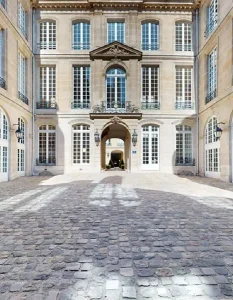
It all starts with the location, as it's the only variable you can't control. Eight weeks before opening, your top priority is to secure your space, because the best locations in the Marais are snapped up months in advance during peak periods, including the four annual fashion windows, Paris Design Week from September 10th to 19th, 2026, and the Christmas season. Visit locations, compare street-facing storefronts and courtyard spaces based on your desired level of foot traffic or privacy, and then make the reservation. Galerie Joseph responds to quote requests within 24 hours, allowing you to secure this step without losing a week. Simultaneously, define your concept in a clear statement and establish a comprehensive budget in sealed envelopes: location, scenography, inventory, staff, and marketing, with a contingency fund for unforeseen expenses. The one milestone that can't be missed is securing the location, as everything else in the timeline depends on it, from scenography plans to press invitations that mention the address.
S-7 and S-6: scenography, production and venue identity
Once the space is secured, provide your set designer or creative team with the plans, photos, and technical specifications of the venue. In the Marais district, spaces with character—exposed stone, beams, and studio-style windows—offer a natural setting that reduces production needs, provided you work with them rather than against them. These two weeks are dedicated to finalizing the plans, approving window displays, and ordering furniture, signage, and printed materials, whose production times are fixed. This is the second crucial milestone; any production order placed after six weeks prior exposes you to last-minute deliveries or emergency surcharges. Also, confirm electrical requirements, additional lighting, and any necessary rigging now, in consultation with the venue manager. In a district governed by the Marais's PSMV (Plan de Sauvegarde et de Mise en Valeur – Preservation and Development Plan), the first protected sector in France, any work on the buildings is subject to strict regulations that must be anticipated rather than discovered during setup.
S-5: Stock, logistics and customer journey
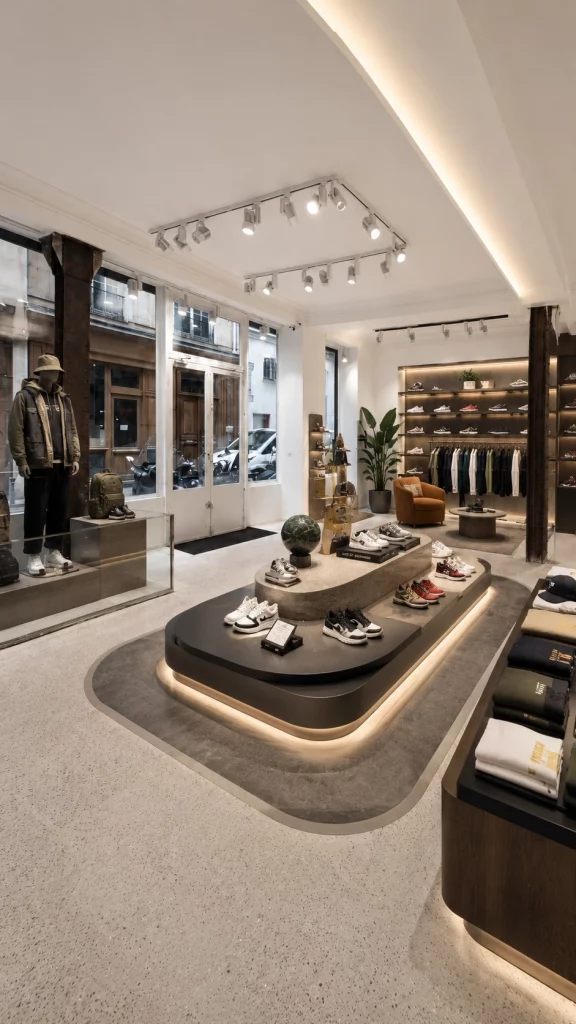
The fifth week before opening is dedicated to physical inventory management. Confirm stock quantities, any exclusive items, and delivery dates, aiming for merchandise to arrive two to three days before opening—neither earlier due to storage constraints, nor later for safety reasons. Finalize payment processing, including the payment terminal, connection, and point-of-sale software, and test everything under real-world conditions before the big day. Map out the customer journey through the space, from the window display to the checkout, keeping in mind key moments and the photogenic corner that visitors will spontaneously share, which is often more valuable than advertising. Also, anticipate last-mile logistics: potential delivery times, site access, door dimensions, and any paved courtyards—details that Galerie Joseph's dedicated logistics manager will confirm with you beforehand.
S-4: Recruit and train the staff
Sales staff make or break a pop-up store. Four weeks before opening, finalize your team, whether it's in-house, hired as reinforcements, or provided by a retail staffing agency. Plan product training, brand messaging, and sales scenarios, but also the practical aspects: schedules, breaks, and opening and closing procedures. A pop-up shop condenses the intensity of several months of traditional retail into a few days or weeks, so the staff must be sized to handle peak periods, especially on launch day and weekends. If your event also targets the press and trade buyers, designate the person who will welcome them now, as this role cannot be improvised amidst the flow of customers. Some brands even choose to separate the two functions by combining their store with a reception area, a formula detailed on our page about space rental.
S-3 and S-2: communication, press and invitations
The communication strategy unfolds in two waves. Three weeks before the event (S-3), activate the public announcement: posts on your social media, email campaigns to your customer base, and updates to your website with the address, dates, and times. Two weeks before the event (S-2), launch the relationship-building phase: press and influencer invitations for the opening evening or morning, personalized follow-ups with top customers, and local partnerships with neighboring businesses. The critical milestone is sending out the press invitations, which must be sent no later than fifteen days before the event to have any chance of being included in newsrooms' calendars. This is also the time to brief a photographer for the opening, as the images from the first few days will fuel all the event's communication and serve as proof for your future projects.
Week -1: The final week's edit and checklist
The final week is all about on-site preparation. Setup typically takes one to three days, depending on the scale of the display, coordinated with the venue manager regarding access, deliveries, and building regulations. Your final week checklist consists of a few crucial checks. Confirm that all stock has been received and labeled. Test the checkout process from start to finish with a live sale that is then canceled. Check the window lighting in evening conditions, as this is how most passersby will see your shop. Verify cleanliness, exterior signage, and compliance with regulations. Rehearse the first day's procedures with the staff, including managing a queue. Finally, reserve the day before opening as a buffer day, with no scheduled tasks; this will absorb any unforeseen issues that inevitably arise.
D-Day: open, measure, adjust
On opening morning, arrive an hour ahead of schedule, activate your key performance indicators (KPIs) – foot traffic, sales, average basket size, email captures – and assign someone to manage real-time content for your social media. A pop-up store is managed daily; the insights gained from the first 48 hours – popular products, slow periods, recurring visitor questions – should inform immediate adjustments to merchandising and staffing. This disciplined approach to measurement transforms a temporary operation into a lasting asset, as the data collected is often as valuable as the revenue generated.
FAQ
Are eight weeks really enough to organize a pop-up store?
Yes, provided the venue is secured in the first week and production orders are placed before week 6. These are two crucial milestones that cannot be missed. For peak periods like Christmas or fashion windows, it's wise to allow several additional weeks just for venue selection.
What are the most critical milestones in reverse planning?
The space must be signed at week 8, the scenography and print orders at week 6, the press invitations sent at week 2, and there's a buffer day before the opening. Any delay on any of these four points will have immediate consequences on opening day.
Who coordinates the technical aspects of the venue during setup?
At Galerie Joseph, a dedicated project manager supports each operation. They validate access, deliveries, electrical requirements and building constraints in advance, and then remain the single point of contact for your teams during setup and operation.
VYour countdown begins at the location
A pop-up shop timeline is read in reverse; everything stems from the opening date and begins with the location. With over 30 spaces ranging from 25 to 1,200 m² in the Marais district, from street-front windows to workshops under glass roofs, Galerie Joseph allows you to take the first step in just a few days, with a quote within 24 hours and a dedicated project manager included. Call +33 (0)1 42 71 20 22 to start your countdown, and keep the complete guide for each stage of your project close at hand.

Event at 84 rue de Turenne, Galerie Joseph
Are you looking for an unusual place in Paris?
Discover the Galerie Joseph spaces in the Marais and find a venue suitable for your launch, showroom, exhibition, pop-up store or private event.