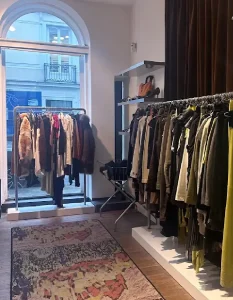
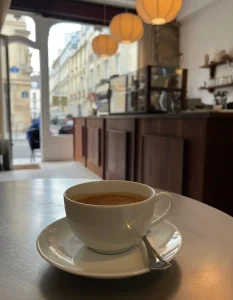
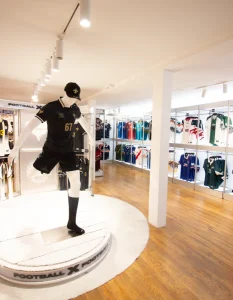
Opening a pop-up store in Paris as a foreign brand requires neither a French subsidiary nor a commercial lease. A simple space-sharing agreement is all that's needed to occupy the space; a few tax and customs details can be sorted out with your advice, and the entire operation can be managed remotely in eight to twelve weeks. This guide separates the myths from the realities of what requires careful planning.
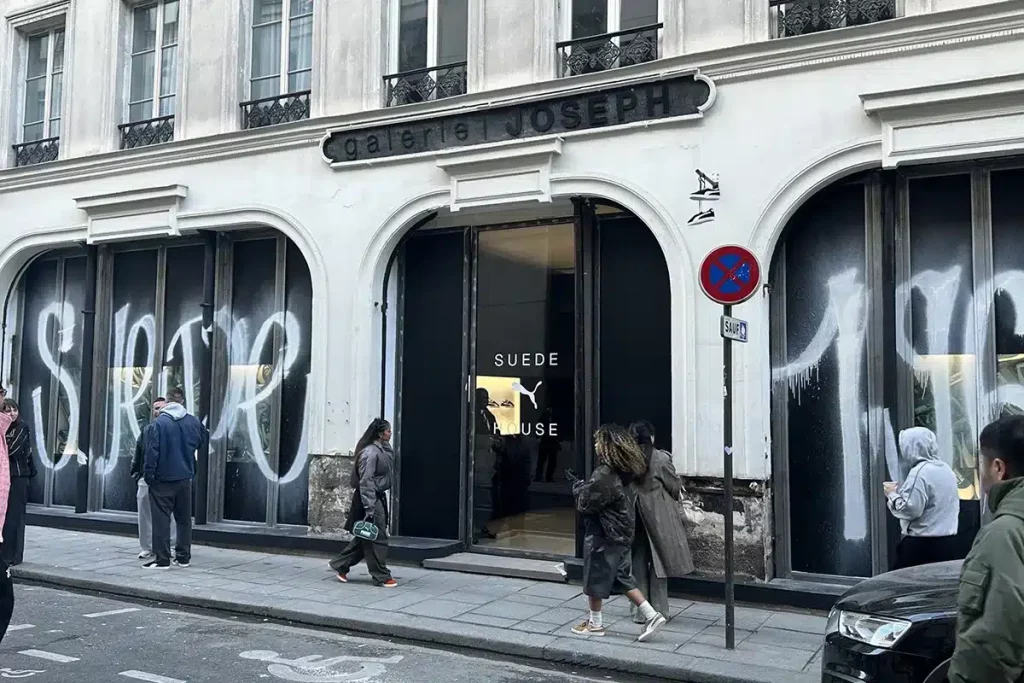
Whether you're the French subsidiary of an international group, an agency supporting foreign brands in the French market, or a company from Brussels, Geneva, or Montreal, you've likely heard the same warning: opening a pop-up store in Paris as a foreign brand is supposedly a daunting administrative process. This reputation deserves closer examination, as it stems from a confusion between a permanent location and a temporary presence. Since 2008, the Galerie Joseph in the Marais district has hosted brands from London, Milan, New York, Seoul, and Shanghai that open showrooms and pop-ups without having any physical presence in France. Here, point by point, is what's a myth and what requires real preparation to establish an international brand in Paris under the best possible conditions.
Summary
The myth of French complexity scrutinized
France has a reputation for complex commercial law, and this reputation is well-deserved when it comes to establishing a long-term presence. However, a temporary project, whether it's a pop-up shop lasting a few weeks, a showroom during Fashion Week, or a press day, doesn't require this legal framework. The confusion stems from this: we mentally apply the constraints of a permanent establishment to a three-week project. Yet the two situations have almost nothing in common. Each season, a significant number of the brands presenting their collections in the Marais operate from abroad, without a French subsidiary, following a well-established path that we detail below.
The framework: a provision of services, not a commercial lease
The key point for a showroom in Paris for a foreign company can be summed up in one sentence: the temporary occupation of a space is done through a space provision agreement, a flexible contract covering a defined period, and not through a commercial lease. A commercial lease is designed for a permanent presence, with its long-term commitments and protective legal framework. A space provision agreement, on the other hand, is accessible to foreign companies that do not have a French entity. Your company, whether incorporated under Belgian, Swiss, Canadian, British, or Korean law, can sign directly. International brands regularly do this with Galerie Joseph, and French subsidiaries managing a project for their parent company also find it a simpler framework to implement than a long-term occupancy agreement. To delve deeper into the fundamentals of this format, consult our comprehensive guide to successfully running your pop-up store.
Points to confirm with your advisors before selling
While access to the location is straightforward, selling products in France raises distinct issues that depend entirely on each company's specific situation. We address these here in a general and factual manner, without ever replacing professional advice: each brand must absolutely validate its setup with its legal and tax advisors. First, the sales structure: depending on the circumstances, a foreign company that collects revenue from sales in France may be subject to registration or reporting requirements that your advisors will be able to identify. Second, VAT: retail sales made in France generally fall under French VAT, and the registration and reporting procedures are the subject of your advisors' analysis. Third, the general obligations associated with temporary retail, which your advisors can map out in light of your project. The fourth issue is the transport of stock: goods coming from outside the European Union go through customs, with duties and formalities handled by a freight forwarder or customs broker, while stock from Belgium or another EU country circulates more simply, with Switzerland having its own specific procedures. None of these points are insurmountable obstacles. They are familiar milestones for any consultant experienced in international retail projects, and they are addressed concurrently with the venue booking.
Operational aspects: cash handling, bilingual team, insurance
Once the framework is established, logistics boil down to three concrete steps. First, payment processing: the chosen system—payment terminal, mobile solution, or system integrated with your e-commerce platform—must be consistent with the sales structure defined with your consultants, and service providers experienced with international retailers can quickly equip a pop-up shop. Next, the team: Paris has agencies specializing in bilingual sales staff for pop-up shops and showrooms, from sales advisors to store managers, which avoids having to mobilize your entire existing team. Finally, insurance: liability coverage for the venue and the public, supplemented by insurance for the stock during transport and while the pop-up is occupied, is arranged for the duration of the project with your usual insurer or a French broker.

Select your space remotely, with complete confidence
Distance is no longer an obstacle to selection. Galerie Joseph regularly signs projects with brands that choose their space entirely remotely, based on detailed floor plans, photo reports, and live video tours. The portfolio includes more than 30 exclusive spaces in the Marais district, in the heart of the 3rd arrondissement, totaling 7,200 square meters, with areas ranging from 25 to 1,200 square meters and capacities from 50 to over 700 people. Ground-floor spaces with large street-facing windows are ideal for public pop-ups, while the cobbled courtyards and salons of 17th-century private mansions, such as the Hôtel de Montmort at 79 rue du Temple or the Hôtel Le Lièvre de la Grange at 4 rue de Braque, a listed historical monument since 1953, are perfect for press days and wholesale appointments. Several addresses are listed as Historic Monuments, within the first protected sector in France governed by the PSMV (Plan de Sauvegarde et de Mise en Valeur) of the Marais. A quote will be sent to you within 24 hours, and the agreement can be signed remotely. For a showroom-oriented project, please see our showroom rental page in Paris.
Typical reverse planning: 8 to 12 weeks from abroad
For a team managing the project from abroad, a comfortable timeline spans eight to twelve weeks. The first two weeks are dedicated to defining the brief, pre-selecting spaces based on floor plans and video tours, receiving the quote, and securing dates. Weeks three through six focus on the administrative aspects: your advisors confirm the sales structure, VAT status, and customs procedures while you book transport and insurance. Weeks six through nine are devoted to the scenography, validated by the floor plans, and launching production with local partners. The final stretch covers shipping the stock so it can clear customs and be delivered before setup, recruiting the team through a specialized agency, and activating the communication strategy. The setup itself takes one to three days, depending on the complexity of the installation.
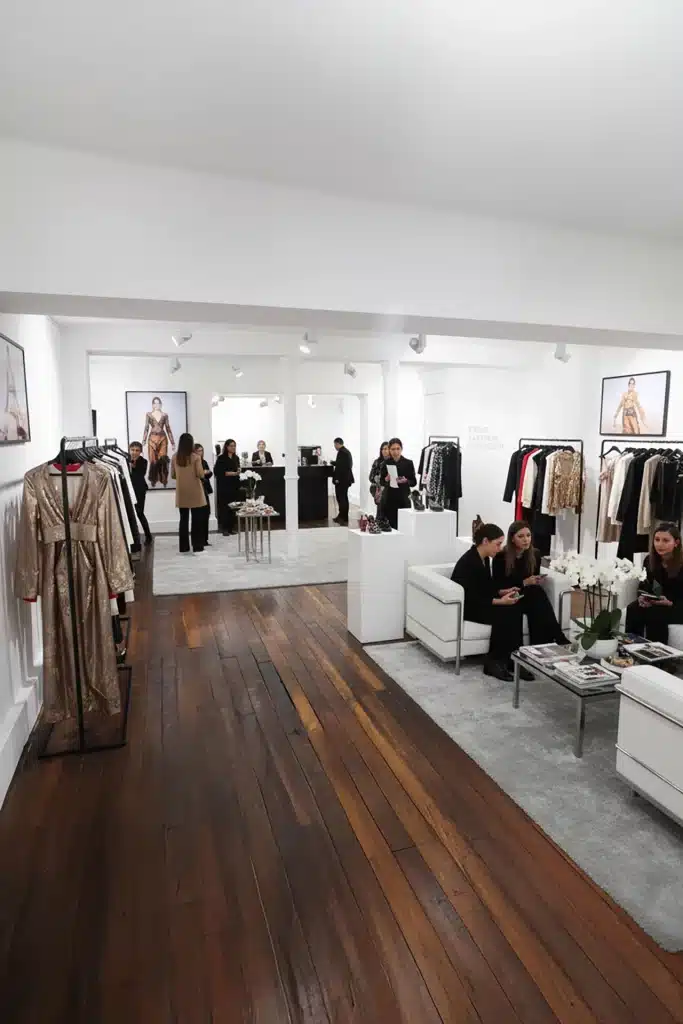
Acheteurs de collections dans un showroom du Marais pendant la Fashion Week to the Galerie Joseph, 236 rue Saint Martin A dedicated manager and trusted partners on site
The part of the project that cannot be managed from Brussels, Geneva, or Montreal is precisely what Galerie Joseph handles. At its flagship locations, a dedicated site manager is present to coordinate access, deliveries, technical issues, and the day-to-day running of the space. Alongside this manager, Galerie Joseph works with trusted partners for scenography and production—teams who understand the proportions, access constraints, and technical capabilities of each space, having built there many times. For a brand arriving from abroad, this local layer eliminates the classic pitfalls of remote project management: deliveries arriving without anyone to open them, installation encountering a problem on the first day, and technical questions without a contact person.
Choose the right window of the Parisian calendar
The timing is just as important as the location. Paris hosts four fashion windows a year: in January, February, and March; in June; and then in September and October, when buyers and the international press converge on the capital and the Marais district becomes the natural home for showrooms and presentations. Design and lifestyle brands target Paris Design Week in September, of which Galerie Joseph has been a partner for about ten years. For pop-up shops catering to the general public, the Christmas period is the peak of the year, and the best street-level locations are booked several months in advance. If your project falls within the wholesale calendar, see our Showroom Fashion Week Paris page: the guide to booking your space.
Are you looking for an unusual place in Paris?
Discover the Galerie Joseph spaces in the Marais and find a venue suitable for your launch, showroom, exhibition, pop-up store or private event.
F.A.Q
Do you need a French company to open a pop-up shop in Paris?
No, the occupancy of the premises is not covered: the agreement for making the premises available is accessible to foreign companies without a French subsidiary. However, the tax and reporting obligations related to the sale in France depend on your specific situation and must be reviewed with your advisors.
Can we choose the space and sign remotely?
Yes. The selection process is typically based on plans, photos, and video tours; the quote is sent within 24 hours, and the agreement is signed remotely. Many brands only see their space in person on the day of installation.
How far in advance should I book?
Eight to twelve weeks is a comfortable timeframe for a first project managed from abroad. For peak periods, such as fashion windows, Paris Design Week, and Christmas, it's wise to plan further in advance, as the most visible spaces in the Marais district are booked well ahead of time.
Ready to open in the Marais?
Selling in Paris as a foreign brand is far from complicated: a simple agreement that any foreign company can sign, a few tax and customs details to confirm, and an operational component managed locally by a dedicated manager and trusted partners. Let's reiterate: the tax and legal aspects of your project must be reviewed with your own advisors, who remain the only ones qualified to analyze your specific situation. For everything else, send your brief to Galerie Joseph and receive a personalized quote within 24 hours.
Call +33 (0)1 42 71 20 22 and start selecting your space in the Marais today, wherever your brand is established.