A simple stroll through the Marais is enough to understand that something different has happened here. While other Parisian neighborhoods have been rebuilt, the Marais has preserved its private mansions, cobbled courtyards, former workshops, and stone facades. This continuity has a specific name: the PSMV, the Marais Preservation and Enhancement Plan, which makes the district the first protected sector in France. For anyone organizing a professional event, this history explains why the setting is authentic and why it has an effect on guests that no stage design can replicate. Galerie Joseph, which brings together more than thirty exclusive spaces in the heart of Paris's 3rd arrondissement, works daily within this protected environment and has made it its signature.
What is the PSMV of the Marais?
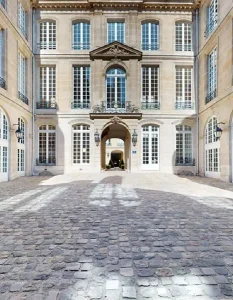
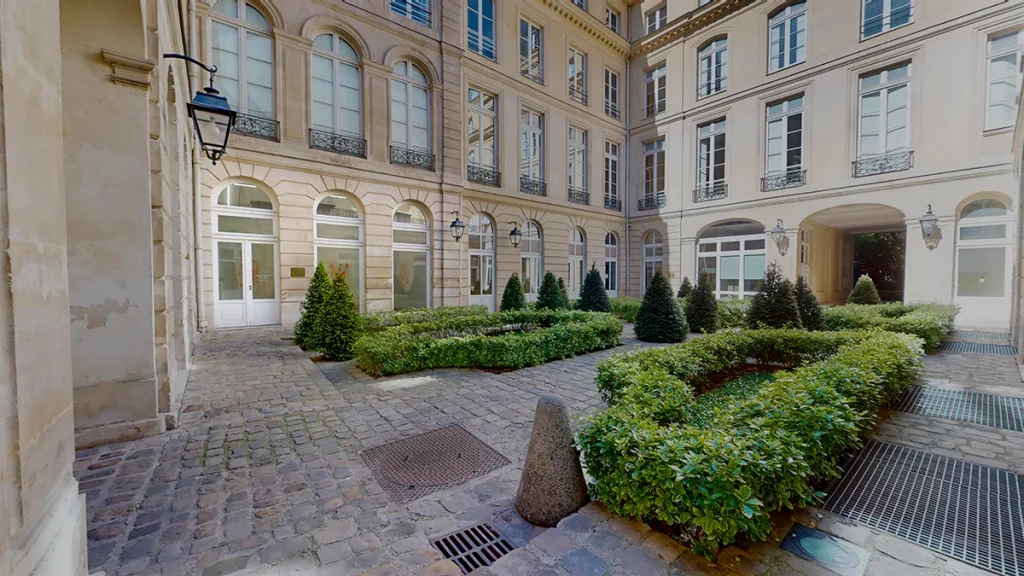
The PSMV (Plan for the Safeguarding and Enhancement of the Marais), or Safeguarding and Enhancement Plan, is the framework governing the preservation of the Marais district. Its principle rests on a simple idea: to protect not just a few isolated monuments, but the entire urban fabric. Facades, courtyards, interior spaces, and the overall harmony of the neighborhood are all covered by this protection. Here, it is the overall coherence that is preserved: the continuity of the streets, the succession of porches, paved courtyards, and historic upper floors. When you push open the carriage entrance of a private mansion on Rue Payenne or Rue du Temple, you enter a setting where every element has been maintained in its original state or restored in keeping with its spirit. For an event organizer, this means one concrete thing: the setting your guests discover is the real setting, not a reconstruction.
Summary
The Malraux Law of 1962 and the first protected sector of France
The legal framework that made this preservation possible stemmed from the Malraux Law of 1962. This law created the concept of a protected sector, and the Marais became its first application in France. This pioneering status means that the district has benefited from this protection for over sixty years. This long history explains the exceptional density of heritage found there today, from 17th-century mansions to artisans' workshops under glass roofs. The district has not been frozen in time, however: it has continued to live, work, and create, but with respect for its historical character.
Why the Marais has kept its private mansions and workshops
The most visible result of the PSMV (Plan de Sauvegarde et de Mise en Valeur – Preservation and Development Plan) is the joint survival of two heritages rarely found together. On the one hand, the aristocratic townhouses: the Hôtel de Montmort at 79 rue du Temple, built in the 17th century; the Hôtel Le Lièvre de la Grange at 4 rue de Braque, listed as a Historic Monument in 1953 with its Louis XV Rococo decor; and the Maison Mansart at 5 rue Payenne, also a listed Historic Monument. On the other hand, the neighborhood's artisanal and manufacturing heritage: these former workshops with their glass roofs, which bathed the workbenches in zenithal light, scattered along rue de Turenne, rue Chapon, rue Charlot, and rue Froissart. Without the protection of their volumes and the preservation of urban harmony, these workshops would likely have disappeared, and the courtyards would have been subdivided. The PSMV has kept the noble and the laborious, the formal salon and the factory workshop, together. It is precisely this diversity that is reflected in the portfolio of Galerie Joseph, from the prestigious private mansion to the glass-roofed workshop, presented on our dedicated page.
What this protection changes for your event
Organizing an event in a protected area means benefiting from an authentic setting and accepting the need to respect it. The first point is a clear competitive advantage: wood paneling, exposed stone, beams, glass roofs, and paved courtyards provide a product launch, exhibition, or press conference with a setting that guests immediately recognize as genuine. The second point is a methodological requirement: in a protected historic building, drilling, hanging, or installation cannot be done haphazardly. Scenography relies on self-supporting structures, rigging respects the walls and decor, and guest flow is planned according to the existing spaces. This is precisely the role of the dedicated event manager that Galerie Joseph assigns to each event: to reconcile the technical requirements of a contemporary production with the constraints of a heritage site, ensuring that the setting remains intact and that the event lives up to its setting.

A living museum-district, open to professional events
The Marais is sometimes described as a museum-neighborhood. This description is apt, provided we add one adjective: vibrant, because this protected heritage isn't just for visiting, it's for experiencing. Galleries exhibit their work, design houses present their collections, and brands organize their launches and showrooms. Galerie Joseph has been part of this vitality since its founding in 2008 by Michael Timsit, and each year it supports the neighborhood's key events, notably as a partner of Paris Design Week for the past ten years, the 2026 edition of which will take place from September 10th to 19th. The protected sector is therefore not a closed sanctuary: it's a permanent stage for professional events, where the preservation of the buildings guarantees the quality of the setting without hindering creativity. Organizers seeking an exceptional setting will find another facet of this heritage in our selection of unique venues .
The Galerie Joseph spaces in the heart of the protected area
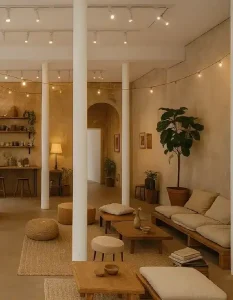
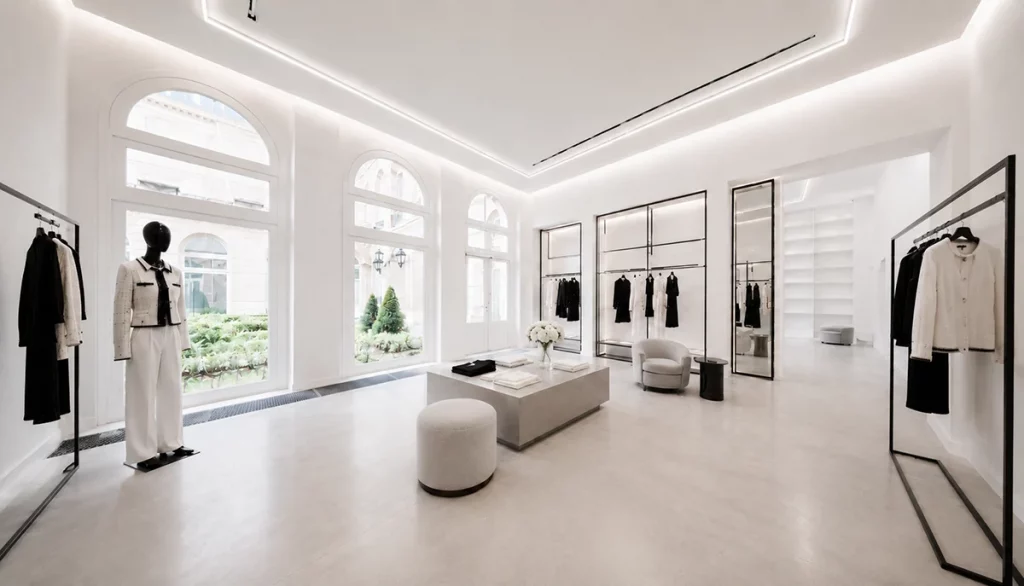
Galerie Joseph brings together over thirty exclusive spaces within this protected area, totaling 7,200 m² in Paris's 3rd arrondissement, ranging in size from 25 to 1,200 m² and accommodating from 50 to over 700 people. The locations are spread across the streets of Turenne, des Tournelles, Chapon, Charlot, Froissart, Payenne, Saint-Merri, 79 rue du Temple, and 5-9 rue Bailly. The diverse spaces encompass the full spectrum of heritage preserved by the PSMV (Plan de Sauvegarde et de Mise en Valeur - Preservation and Development Plan): former glass-roofed workshops inherited from the neighborhood's manufacturing past, galleries with white walls and street-facing windows, spaces with exposed stone and beams, cobbled courtyards, and exceptional private mansions, including an apartment on the Place des Vosges in a building listed as part of the Henri IV ensemble. Each space illustrates, in its own way, what the protection of the safeguarded sector has allowed to be preserved, and our page dedicated to private mansions showcases the finest examples.
Properly preparing an event in a protected historic building
The success of an event in a protected area hinges on anticipation. A site visit is essential beforehand to understand its layout, access points, and circulation patterns. The scenography must be designed to complement the existing décor rather than attempting to conceal it. Finally, it's crucial to work with a team intimately familiar with each building. This is Galerie Joseph's approach: a single point of contact who understands the history and technical aspects of each address, a dedicated event manager on the day of the event, and a prompt response in advance, with a quote provided within 24 hours. This method allows agencies, fashion houses, and communications departments to fully capitalize on the unique privilege of hosting an event in France's premier protected area.
FAQ: The PSMV of the Marais and your events
What does PSMV mean and what exactly does it protect?
PSMV stands for Plan for Safeguarding and Enhancement. In the Marais district, this system, established by the Malraux Law of 1962, protects the facades, courtyards, volumes, and urban harmony of the neighborhood. It is this comprehensive protection that explains why the Marais has preserved its old buildings, its private mansions, and its former artisans' workshops.
Is it really possible to organize a professional event in a protected area?
Yes, and that's actually one of the Marais's unique features: the protected area remains a vibrant neighborhood. The Galerie Joseph spaces host product launches, exhibitions, showrooms, press conferences, and other professional events, all while respecting the existing architecture. A dedicated event manager oversees each installation to ensure a smooth event production while preserving the existing setting.
Are the private mansions in Galerie Joseph protected as Historical Monuments?
Several are. The Hôtel Le Lièvre de la Grange, at 4 rue de Braque, has been a listed historical monument since 1953 and retains its Louis XV rocaille decor. The Maison Mansart, at 5 rue Payenne, is also a listed historical monument. The apartment on the Place des Vosges is located in a building classified as part of the Henri IV ensemble.
UA protected heritage site, a stage for your events
The protected Marais district is not a constraint for events; it's its greatest asset. Thanks to the PSMV (Plan de Sauvegarde et de Mise en Valeur – Preservation and Development Plan), every façade, every cobbled courtyard, and every glass roof your guests discover is an authentic fragment of Parisian history. Galerie Joseph has been making this heritage available to you since 2008, with over thirty exclusive spaces and comprehensive support, from the initial consultation to the day of your event. To give your next professional event the setting of France's premier protected district, contact our team at +33 (0)1 42 71 20 22: you will receive your quote within 24 hours.
Are you looking for an unusual place in Paris?
Discover the Galerie Joseph spaces in the Marais and find a venue suitable for your launch, showroom, exhibition, pop-up store or private event.