Creating a budget for an exhibition in Paris is primarily a matter of methodology. From venue and transportation to insurance and communication, each item must be considered in relation to the project's objectives. This guide offers a clear approach to structuring, prioritizing, and effectively allocating your budget.
Creating a budget for an exhibition in Paris is more of a methodological exercise than a numbers game. Each project has its own specific requirements, depending on the size of the artworks, the duration, the ambition of the opening, and the chosen timeframe. What remains constant, however, is the list of items to cover and the rationale for prioritizing them. A solid budget is built by first identifying all the line items, then anchoring the main item—the venue—with a firm quote, before sizing the rest around it. This article reviews each item, explains how to prioritize them, and details the method used by exhibitors working with Galerie Joseph, whose more than 30 spaces in the Marais district have hosted professional exhibitions since 2008. You will intentionally not find any specific figures here—a generic number would be misleading—but rather a complete structure and a method for quickly generating your own budget.
Summary
The location, a structuring element that governs all others
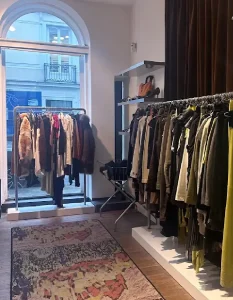
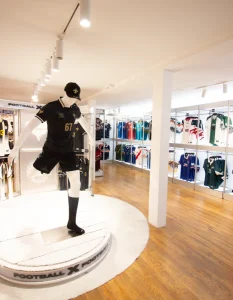
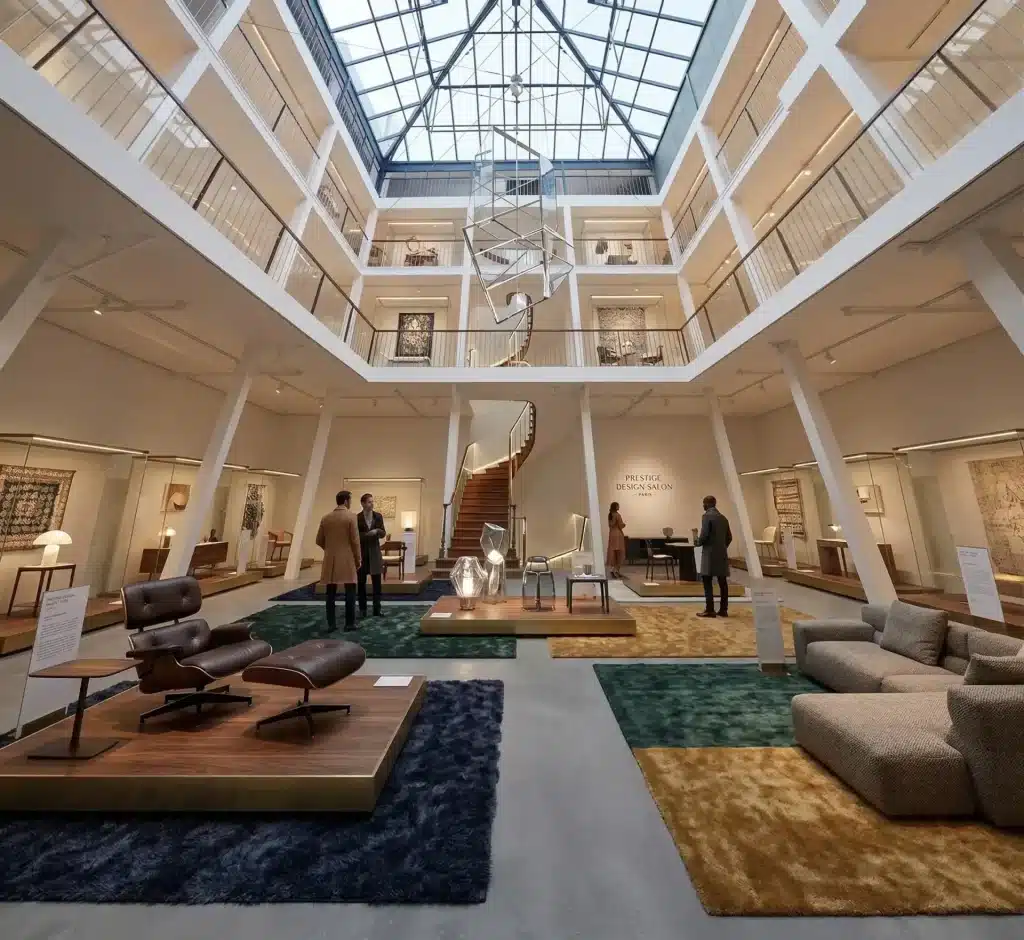
The venue is the first item to consider, not because it's necessarily the most expensive, but because it determines all the others. The surface area dictates the number of artworks, and therefore the transport and insurance costs. The location determines the natural foot traffic, and thus the marketing effort required. The layout dictates the exhibition design, the hanging of the works, and the staff needed. A gallery with a street-front window in the Marais district attracts a flow of qualified passersby, which a space on an upper floor will have to compensate for with more promotion. This is why a serious budgeting process begins with a request for a precise quote for the venue, before any other estimates. The spaces available for rent range from 25 to 1,200 square meters, allowing you to adjust this item to the reality of your project rather than the other way around.
The transport of artworks, an often underestimated factor
Shipping costs are calculated both ways, to and from the artwork, and depend on its size, weight, fragility, and origin. Small framed pieces from a Parisian studio don't present the same challenges as sculptures or large-format works from abroad, which may require a specialized art carrier, custom crates, and experienced handlers. Also consider ancillary costs such as packaging, temporary storage, and the required presence during deliveries. Best practice is to finalize the list of artworks as early as possible, as any late addition of large pieces can throw this cost off. A ground-floor location with direct street access, common in Marais galleries, simplifies handling and reduces the risk of unforeseen issues on delivery day.
Nail-to-nail insurance, the non-negotiable line
Artwork insurance, also known as "nail-to-nail" insurance, is the standard in the art world. It covers artworks from the moment they are taken down from the artist or lender until their return, including transport, handling, and the entire duration of the exhibition. This coverage is directly linked to the total declared value of the artworks, making it a line item mechanically tied to your selection. In addition, there is the organizer's liability insurance, required by the venue, which covers damages related to public access. These two coverages are not optional. Reducing the declared value to lower the cost of the insurance risks insufficient compensation in the event of a loss, and exhibiting without liability insurance is simply not permitted by professional venues.
Exhibition design and display: the investment that enhances each work
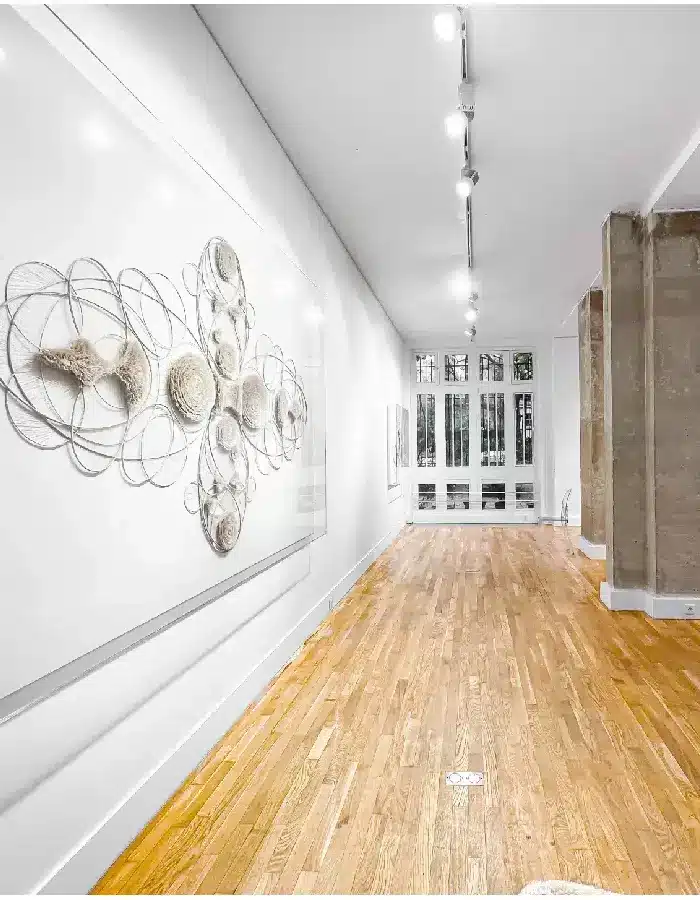
Exhibition design encompasses everything that prepares the artworks for viewing: picture rails and panels, freestanding structures, pedestals, supplementary lighting, labels, and signage. In the historic buildings of the Marais district, hanging is done with respect for the existing structure, with pre-defined openings and a plan approved before the contract is signed. This must be planned in advance rather than discovered during installation. This aspect also includes labor—installers, lighting technicians if necessary—and the time required for setup and dismantling, which is added to the public opening time included in the venue booking. The choice here is based on quality; a simple, well-lit exhibition design in a space with white walls often showcases the artworks better than a spectacular display.
Communication and printing, the position that fills the room
An exhibition without visitors is a cost with no return. The communications budget covers graphic design, printed and digital invitations, press kits, press relations (if you delegate this), social media promotion, and on-site printing of labels, posters, catalogs, or publications. The rule of thumb is simple: communication efforts are scaled according to the artist's existing reputation and the venue's natural visibility. A storefront window on a busy street in the Marais, on a Thursday opening night during the autumn art fair season in September and October, will work in your favor. Conversely, a more intimate, off-season project will require a greater investment to build its audience.
Opening, security and reception: the operational roles
Three key roles encompass the life of an exhibition. The opening reception includes catering, service, cloakroom, and any additional staff needed for the evening, with Thursday evenings being the traditional time slot in the Marais district. Security protects the artworks during opening hours and, depending on their value, outside of those hours. Finally, the reception staff welcomes visitors, provides information about the artworks, and collects contact details—a role that is as much commercial as it is logistical. The size of these roles depends on the duration of the exhibition, its opening hours, and the venue's capacity. A heritage setting, such as a private mansion available for rent, for example, shifts the focus towards the evening and the visual aspects.
The arbitration method: prioritize instead of skimming.
Faced with a limited budget, the classic mistake is to cut every item uniformly, which weakens everything without saving anything. The right approach is to prioritize. First, protect the non-negotiable items: comprehensive insurance, public liability, and artwork security. Next, secure the key item—the location—at the right level, because a prime spot in the Marais district automatically reduces the need for paid advertising and lends credibility to the approach with collectors and the press. Finally, adjust the operating items according to your primary objective. If your priority is sales, strengthen customer service and follow-up. If it's media visibility, invest in press kits and opening receptions. If it's building a community, prioritize the duration and length of opening hours. Every resource must serve the main objective before comfort.
A response within 24 business hours, the tool to anchor your budget
As long as the venue cost remains an estimate, the entire budget is uncertain. The most effective method is to convert this cost into a firm figure from the outset of the budgeting process. Galerie Joseph responds to all inquiries within 24 business hours, providing a quote based on your dates, the desired space, and the nature of your project. With this figure in hand, you know the exact portion of the budget remaining available for transportation, insurance, exhibition design, communication, and operation, allowing you to make informed decisions. Remote selection is possible, based on a portfolio of photographs and plans, enabling project owners outside of Paris to develop their budget without multiple trips. A discussion with the dedicated venue manager then allows for the refinement of technical aspects, hanging, installation, and specific requirements before any commitment is made.
FAQ: Exhibition budget in Paris
What is the most important item in an exhibition budget?
The venue is the key element, not just because of its financial weight, but because it dictates all the others: space, transport, insurance, communication, and staff. That's why it must be priced first, with a firm quote, before determining the rest of the budget.
Can we reduce the insurance expense to lighten the budget?
No. Insurable coverage is standard practice in the art world, and professional venues require liability insurance for the organizer. Underreporting the value of artworks exposes the client to insufficient compensation in the event of a loss. Savings are sought in operating and communication costs, never in the insurance of the artworks themselves.
How to budget for an exhibition from abroad or from the provinces?
At Galerie Joseph, remote selection is possible, based on photographs, plans, and a detailed discussion of your project. The quote, sent within 24 business hours, provides a fixed price for the venue, around which you can then work with your other service providers, such as the art transporter, insurer, and printer, to determine the remaining costs.
A fair budget starts with a firm figure
A successful exhibition budget isn't necessarily the most economical; it's one where every line item serves the project's objective. List all expenses, secure insurance coverage, confirm the venue with a concrete quote, and allocate the remaining budget based on your priorities: sales, press, or audience engagement. To receive a detailed budget estimate within 24 hours to structure your plan, consult the guide to renting an art gallery and describe your project to the Galerie Joseph team at +33 (0)1 42 71 20 22.
👉 Discover all our spaces on Galerie Joseph.
Are you looking for an unusual place in Paris?
Discover the Galerie Joseph spaces in the Marais and find a venue suitable for your launch, showroom, exhibition, pop-up store or private event.