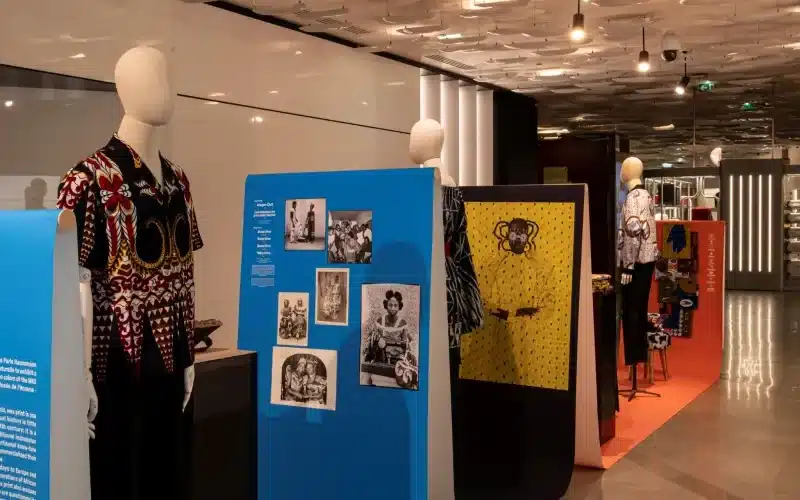
Le wax It is much more than just a fabric with colorful patterns. It is a true cultural heritage, a living symbol of African history and identity.
Across centuries, continents, and cultures, it has conveyed profound messages about identity, social struggles, and cultural heritage. The "Wax" exhibition, currently on display at the Musée de l'Homme , allows us to discover this fascinating fabric in all its facets, highlighting its history and multiple meanings.
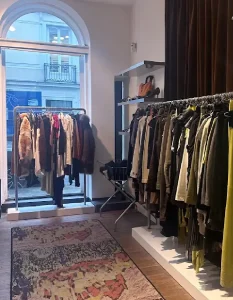
Galerie Joseph similarly offers spaces where art and fashion meet, and where designers can engage in dialogue with the public and history, thanks to its temporary exhibition galleries and showrooms.
The Origins of Wax: Between Tradition and Colonization
Although closely associated with West Africa, wax print fabric has roots that extend back to Indonesia. Originally, it was a wax-dyed fabric, a technique similar to Indonesian batik . This dyeing method was adapted by Europeans in the 19th century and mass-produced to meet the demand for textiles in the colonies. The fabric, with its vibrant colors and distinctive patterns, was distributed throughout the world, but it is in West Africa that it has found a special place in the culture.
This fabric is not merely imported; over time, it has transformed into a true cultural symbol, representing a link to colonial history while simultaneously becoming an object of pride and cultural affirmation for many African communities. This process of reappropriation of wax print has allowed it to blend into local culture and take on a new meaning: that of resistance and the assertion of African identities in the face of colonial history.
Wax: A Symbol of Identity and Cultural Affirmation
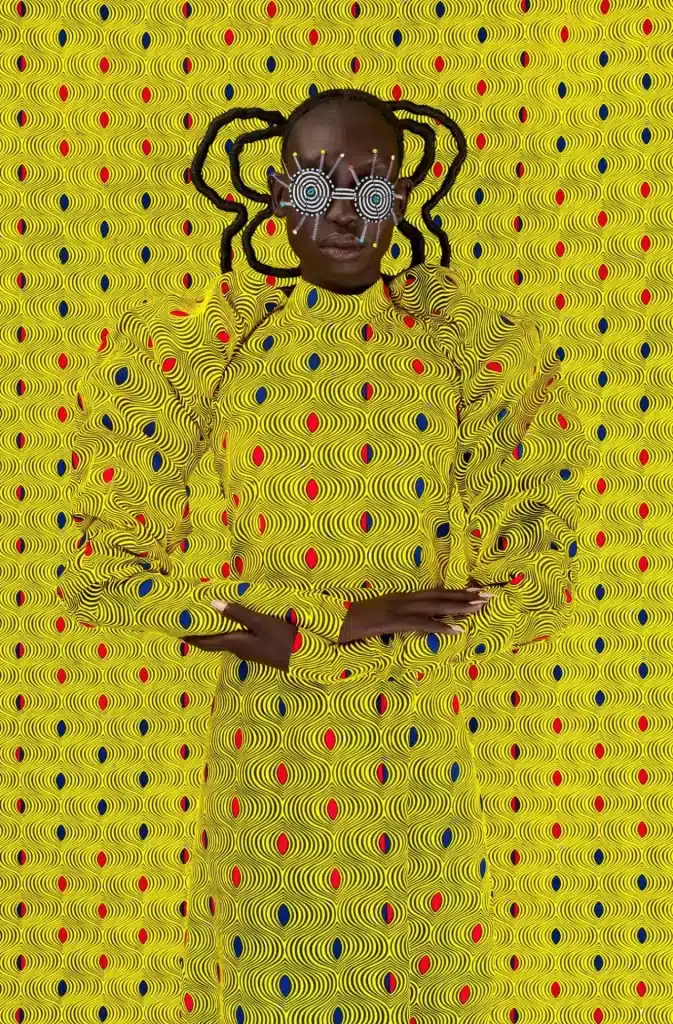
Wax print fabric is not just clothing; it's also a vehicle for powerful messages. Each pattern and color carries a specific meaning. This fabric becomes a unique means of expression, a way to show who you are, where you come from, and what you stand for. For many Africans and people of African descent, wax print is an emblem of their identity and heritage. Wax print patterns are rich in symbolism: some are inspired by wildlife, plants, or scenes from daily life, while others carry deeper messages related to politics, religion, or historical events.
This fabric is therefore a mirror of the evolution of African societies, a witness to the social and cultural concerns of each era. It is not simply a fashion item, but a true means of connecting with one's roots and asserting one's identity in the face of historical challenges.
The Nana Benz: Key Figures in the History of Wax
The Nana Benz , Togolese businesswomen of the 1960s, are emblematic figures in the history of wax print fabric. These women played a crucial role in popularizing wax print across West Africa. They were the first to distribute this fabric in the region's markets, and their economic empire transformed wax print into a luxury item. Thanks to their influence, wax print became a central element of West African fashion and identity.
The exhibition at the Musée de l'Homme pays tribute to these businesswomen and their fundamental role in the spread of wax print fabric, with photographs and objects that trace this economic and cultural history. The Nana Benz knew how to use this fabric as a lever of power and social affirmation, thus demonstrating that wax print is much more than a simple consumer product: it is an integral part of the region's history and economy.
Wax in Contemporary Art
Wax print fabric is not just a consumer product; it is also a source of inspiration for many contemporary artists. Photographers and designers like Malick Sidibé and Seydou Keita have immortalized this fabric in their works, integrating it into the heart of the art scene. These photographers captured the essence of 1960s Africa, where wax print was ubiquitous. It became a symbol of an era, a testament to the social and cultural development of Africa at that time.
Today, artists like Thandiwe Muriu , Omar Victor Diop , and Krissina Poba are reinterpreting wax print fabric in their creations. These artists explore identity, globalization, and cultural appropriation through their use of wax print. They transform the fabric into a symbol of emancipation and the reclaiming of a history sometimes marked by colonization.
By deconstructing the stereotypes associated with wax print fabric, these artists reveal the richness and complexity of its patterns and colors. Their work prompts reflection on how these cultural elements can be reinterpreted and appropriated in a globalized world.
Wax: A Globalized Consumer Product
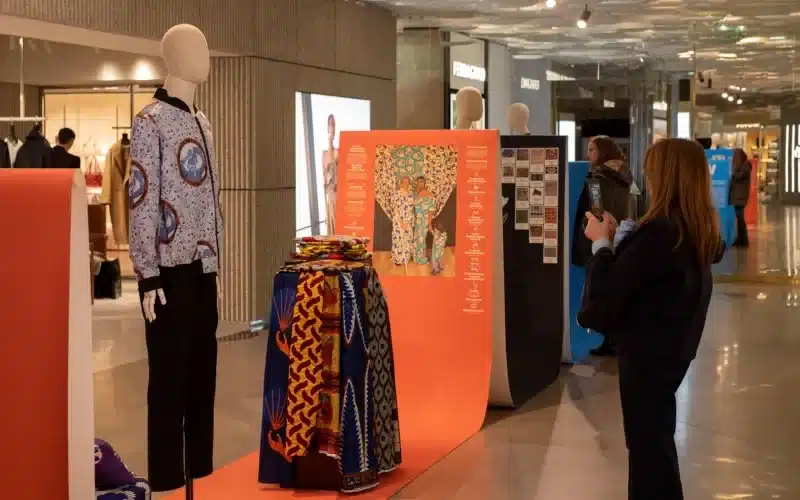
Wax print fabric has become a global product, consumed far beyond the borders of West Africa. Its success now extends beyond the African continent, and it has taken root in Western societies, where it is often associated with authenticity and exoticism. However, this global popularity raises questions about cultural appropriation and the product's authenticity.
Today, wax print fabric is manufactured in countries like China, leading us to wonder whether this fabric, once a symbol of resistance and pride for African populations, has lost some of its essence in a globalized world. The exhibition at the Musée de l'Homme explores this paradox between tradition and globalization, inviting visitors to reflect on the role of wax print in the construction of new cultural identities worldwide.
Galerie Joseph: An Exhibition Space at the Crossroads of Fashion and History
In the world of art and fashion, venues like Galerie Joseph play a key role. By offering gallery rentals and temporary showrooms, these spaces allow designers to showcase their work while fostering cultural exchange. Galerie Joseph is a major player on the international fashion scene, supporting numerous artistic initiatives.
Like the Musée de l'Homme exhibition, Galerie Joseph offers spaces where art and fashion meet, and where designers can engage with the public and history. These temporary exhibition galleries and showrooms provide a platform for contemporary artists and designers to gain visibility, thus helping to strengthen the link between past and present.
An Essential Exploration of Wax and its Heritage
The "Wax" exhibition at the Musée de l'Homme is a fascinating immersion into the history of this fabric, but also into the history of the peoples and cultures who have worn it. Far from being a mere consumer product, wax is a living testament to the evolution of societies, the struggles for identity, and cultural assertions. Through art, economics, and fashion, it forms a true bridge between generations and continents.
This exhibition is a must-see for anyone interested in fashion, history, and art. It offers a chance to rediscover a fabric that, far more than just a garment, embodies the richness of African culture and its fusion with the rest of the world.
For more information on gallery rentals: Galerie Joseph