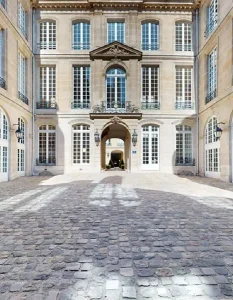
On January 24, 2025, the Louvre Museum opened its doors to a groundbreaking exhibition that transcends the traditional boundaries between art and fashion: Louvre Couture.
This encounter between the museum's masterpieces and the creations of the great names in contemporary fashion offers a unique immersion in a world where the history of art objects meets the stylistic innovation of the most emblematic designers of the 21st century.
At the heart of this exhibition, some one hundred pieces—dresses, accessories, jewelry—by 45 designers from the most prestigious fashion houses, such as Dior , Saint Laurent , Chanel , and Dolce & Gabbana , are displayed in the museum's Department of Decorative Arts. Far from being a mere exhibition, Louvre Couture aims to be a true dialogue between two worlds that, although seemingly distant, are linked by a shared history of creativity, aesthetics, and craftsmanship.
This event, which celebrates the interconnectedness of fashion and art, is a source of inspiration for key players in the sector, such as Galerie Joseph , which is passionate about this type of exhibition that bridges luxury and innovation. As a leading space for fashion and luxury in Paris, the gallery is committed to showcasing projects that, like Louvre Couture , continually redefine the boundaries of creativity and aesthetics.
Fashion as an Art Form: A Meeting of Generations
In a 9,000-square-meter exhibition space, the works of contemporary fashion masters engage in a dialogue with the Louvre 's historical collections . Louvre Couture offers a visual journey that transports us from Byzantine mosaics to the treasures of the Second Empire, by way of the Renaissance and the Grand Siècle. Each piece, whether a jacquard dress by Dolce & Gabbana or an ensemble by Rabih Kayrouz , responds to a work of art: a 16th-century tapestry or a 13th-century ornamental statuary group.
The exhibition's curator, Olivier Gabet , and his team wanted to avoid a complex scenography. Instead, they opted for a subtle "blend," a fusion between haute couture and decorative objects. This approach allows us to perceive fashion creations not only as works of art in themselves, but also as the product of a tradition that draws on the techniques of the decorative arts. This convergence of art and fashion, of history and contemporary design, reflects a desire to reinterpret the Louvre's collections through the lens of modern designers.

Fashion Inspired by History
The pieces in Louvre Couture are not displayed for their sheer beauty, but for the dialogue they establish with antique objects and decorative masterpieces. Designers like Iris van Herpen , Karl Lagerfeld, and Alexander McQueen have drawn inspiration from history, from the forms, textures, and materials found in the Louvre's collections. A "cathedral" dress by Iris van Herpen, for example, 3D-printed, seems to have stepped straight out of the medieval landscapes depicted in the museum's tapestries. A dress made of Hermes horn, meanwhile, harmonizes perfectly with a 16th-century tapestry, thus connecting fashion to an era when ornamentation reigned supreme.
This exhibition is not only a celebration of fashion, but also of how ancient art continues to influence the world of contemporary fashion. By reinventing decorative elements from the past, designers create innovative and timeless works. And this dialogue between different art forms compels us to reconsider our perception of fashion: far from being a mere ornament of society, it becomes a reflection of history, a means of interpreting and reinterpreting the world through the lens of designers.
An Event That Reinvents the Showroom Experience
Louvre Couture fits perfectly into the new dynamics of the exhibition world. Where a showroom is traditionally an ephemeral space for presenting collections, the Louvre exhibition goes further. It transforms the exhibition space into a meeting place for art, fashion, and the public. These spaces, often used by brands to attract an exclusive clientele, are here enhanced by the museum's historical context, making the experience unique and immersive.
Contemporary designers have, over the decades, grasped the importance of this notion of immersion. Showrooms are becoming places where history and innovation converge, where the artwork is no longer an object separate from the world of fashion, but a partner in the creative process. This exhibition offers visitors a broader vision of what an exhibition space can be : a place where fashion, far from being a mere consumer product, becomes a true art form, resonating with the antique objects that surround it.

Galerie Joseph: A Key Player in the World of Fashion and Art
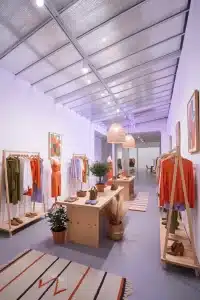
Within this dynamic, Galerie Joseph perfectly embodies the fusion of art and fashion, offering exhibition spaces dedicated to events that reinvent the showroom experience. Like Louvre Couture , Galerie Joseph positions itself as a place where designers can experiment and offer visitors an immersive and innovative experience. It has established itself as a key player in both the fashion and art worlds, supporting events that, like this exhibition, foster dialogue between different forms of creativity.
Through its modern and adaptable spaces, Galerie Joseph allows designers to showcase their collections in an aesthetically pleasing and inspiring setting, while celebrating the connections between artistic traditions and contemporary trends. Innovation, whether artistic or commercial, finds fertile ground in this space where history and the avant-garde converge.
Louvre Couture, by reinventing the exhibition format, invites us to reflect on the role of fashion in our culture and how the great names of couture continue to draw inspiration from the treasures of the past. An event not to be missed, demonstrating that art, in all its forms, is eternally alive.
To learn more about Louvre Couture
To learn more about the exhibition galleries of Galerie Joseph